
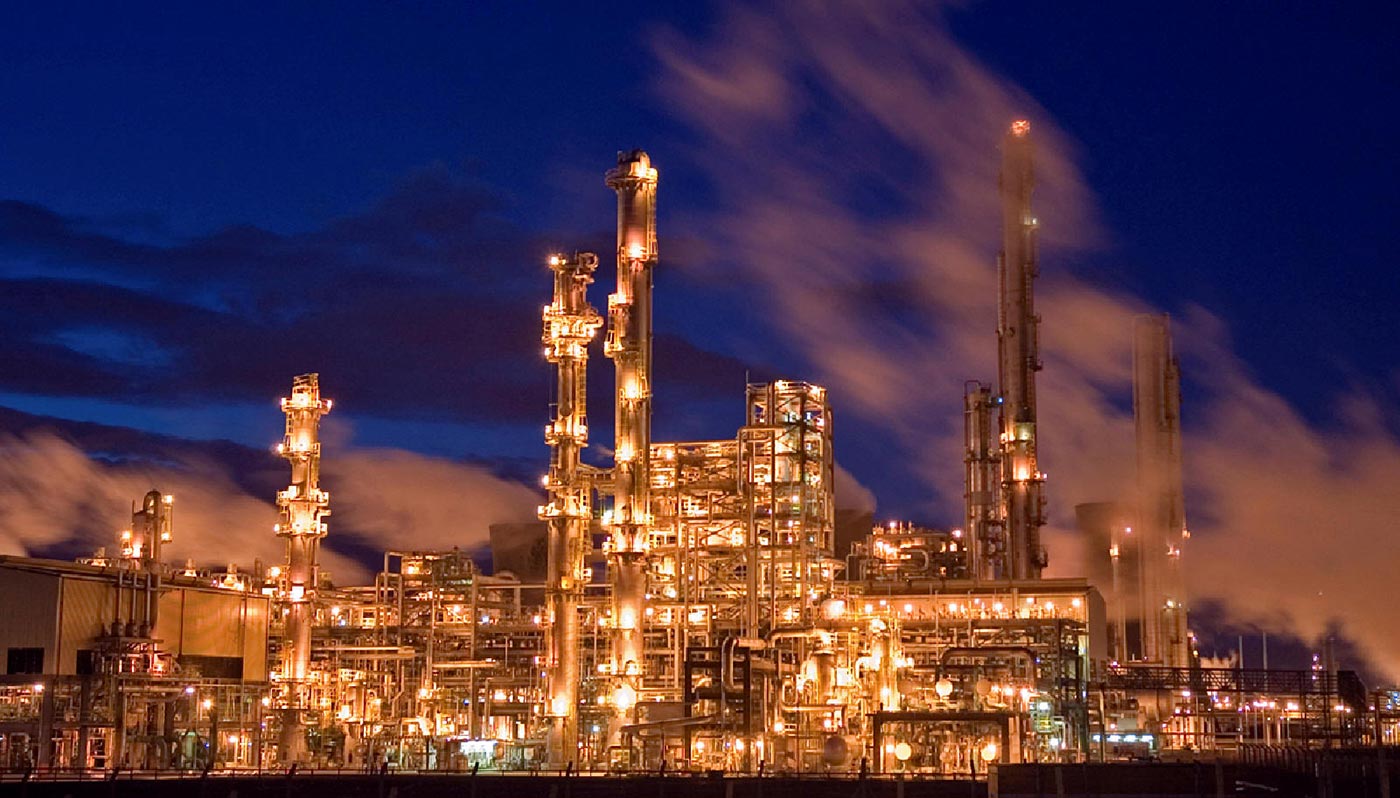
Sulphur Recovery Units
Howe Baker provides engineering and EPC delivery for Claus sulphur recovery units, tail gas treating units and acid gas enrichment systems across refinery and gas processing applications.
About This Solution
Sulphur recovery is an environmental and operational requirement for refineries and gas processing plants handling sour feedstocks containing hydrogen sulphide (H₂S). The modified Claus process is the most widely applied conversion method, accounting for approximately 90 to 95 percent of global sulphur recovery. A conventional two-stage Claus SRU typically recovers 96 percent or more of inlet H₂S; a three-stage configuration achieves 98 percent or more. Where more stringent environmental limits apply, a Tail Gas Cleanup Unit (TGCU) is added downstream.
The Claus process operates in two steps: a portion of the H₂S feed is combusted in the reaction furnace to form SO₂, after which H₂S and SO₂ react at an optimised 2:1 molar ratio across catalytic Claus reactors to produce elemental sulphur. Liquid sulphur is recovered in condensers between each catalytic stage.
Howe Baker provides process engineering, detailed design and EPC delivery for Claus SRU systems including proprietary burner and combustion air control design, acid gas enrichment, tail gas treating, sulphur degassing and liquid sulphur handling. Howe Baker's proprietary SRU burner incorporates a bolted replaceable ring design that allows field replacement of the burner ring within one day —.
Discuss This Technology
Speak to a Howe Baker engineer about your specific project requirements.
Start a Project EnquiryWhere This Solution Is Used
Refinery SRU
Sulphur recovery from amine regenerator acid gas and sour water stripper acid gas in crude oil refinery operations.
Gas Processing SRU
Sulphur recovery from acid gas produced by amine sweetening of sour natural gas, associated gas and LNG plant feed gas.
Tail Gas Treating
Reduction of SO₂ emissions in SRU tail gas by additional sulphur recovery in tail gas treating units (TGTU) to meet environmental permit requirements.
Acid Gas Enrichment
Concentration of H₂S in dilute acid gas streams by selective amine scrubbing to improve SRU stability and reduce sulphur recovery unit size.
Sulphur Degassing
Removal of dissolved H₂S from liquid sulphur product prior to storage and handling to meet transport safety requirements.
SRU Capacity Expansion
Engineering assessment and design for SRU throughput expansion to accommodate increased acid gas loading from refinery processing capacity increases.
Howe Baker's Engineering Role
Claus SRU Process Design
Detailed SRU process design including thermal stage and catalytic converter sizing, reaction furnace design, waste heat boiler specification and sulphur condenser design.
Thermal Stage Engineering
Combustion analysis and reaction furnace design for a wide range of acid gas compositions including variable H₂S content, ammonia-containing feeds and hydrocarbon co-firing.
Catalytic Converter Design
Sizing and configuration of Claus catalytic converters including catalyst selection, reheating method selection and temperature control design.
Tail Gas Treating Design
Engineering of hydrogenation and absorption-based TGTU systems including quench, absorber and stripper design for high sulphur recovery efficiency.
Environmental Compliance
Design to meet specific SO₂ emission limits including overall SRU/TGTU configuration selection to achieve required total sulphur recovery efficiency.
EPC Project Delivery
Full EPC capability for new SRU/TGTU projects including procurement, fabrication, construction management and commissioning.
Speak to Howe Baker About This Requirement
Our engineering team can assess your requirements and advise on the most appropriate solution, configuration and delivery model for your project.
Start a Project Enquiry